Common interior design mistakes

Common interior design mistakes

There are a lot of common mistakes that people make when they are designing their interiors. I want to share with you 7 most common mistakes in interior design. I will provide you with tips and information and how to avoid it immediately. Of course, we all make mistakes. The important thing is to fix them!

Mistake #1. Designing the room without considering your style and needs.

One of the biggest mistake about designing space is that people don’t stop to think and to ask themselves what they really want and need. Instead of following trends and use someones ideas, first ask yourself what you admire about the rooms, what you like about those inspirations. Is it the colors? The textures? The materials? The lightning? The kind of furniture? Once you have personal preferences, then you can begin your own interior home decoration with confidence. Remember – the good design is not only about the beauty. You should live in your space and identify how family uses it before you remodel. Because it is a great way to learn about details you will want to include in your design plans.

Mistake #2. Not measuring the space.

Before selecting furniture and decor elements you must measure your space. Not planning a space usage is a common interior design mistake that people make. Don’t rely on your eyes to measure space before purchasing furniture and decorative accents measure all the dimensions of your space to avoid over crowding or under furnituring. Think about the space for the circulation you need, measure the heights available, take elements of your wall to select an art in a scale and proportion of the area.

Mistake #3: Exposed cables.

All details count an interior design. Another common mistake that affects perception and order in a space – as having visible cables that run through walls and other surfaces. It is important to hide these cables and wires, especially near TV, lamps, and other electrical fixtures. If you can hide TV cables inside the walls, choose to use a cord hider, you will have better appearance instantly.

Hide wire clutter with plastic shower rod cover
How to hide your television cables? « Cherrie Hub

Mistake #4. Having one light source.

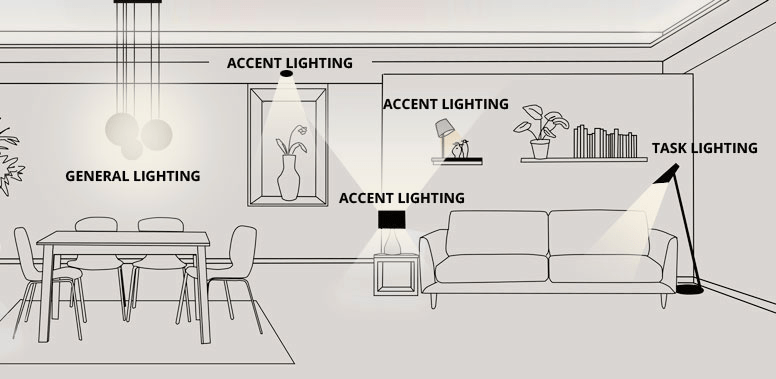
Lighting is a key in interior design and it is an aspect that people often forget. Having a single light source in each room may allow you to see in the dark, but it is not doing your decor any favors. Add layered lights. Only one light source is not enough because it doesn’t help to create contrast, depth or define shapes and make the colors pop. Fix this mistake by adding different lightning sources in the space. You need to have layered lightning sources such as ambient lightning for overall illumination through table, wall, hanging or ceiling lamps. Accent light to highlight and draw attention to specific object or area. Add task lightning to a particular task or activity such as reading, writing or eating. A good lightening plan for the interior decoration will combine all three sources at different heights.
Mistake #5. Rug Size.

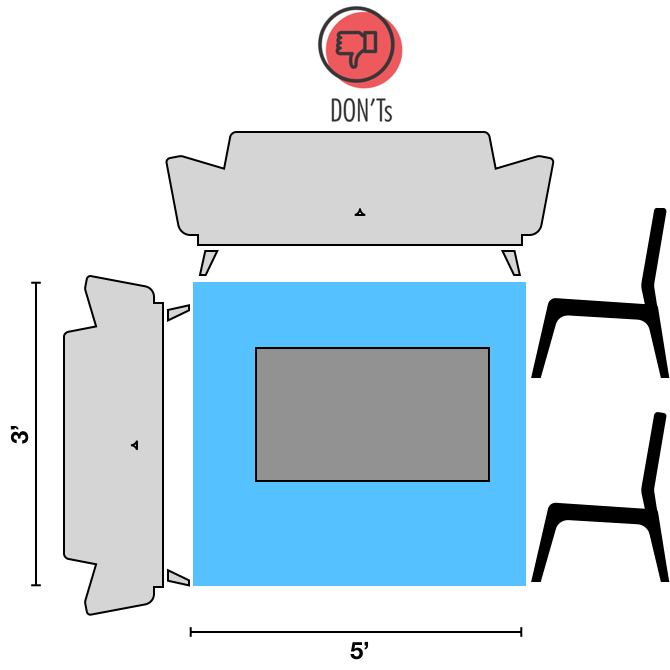
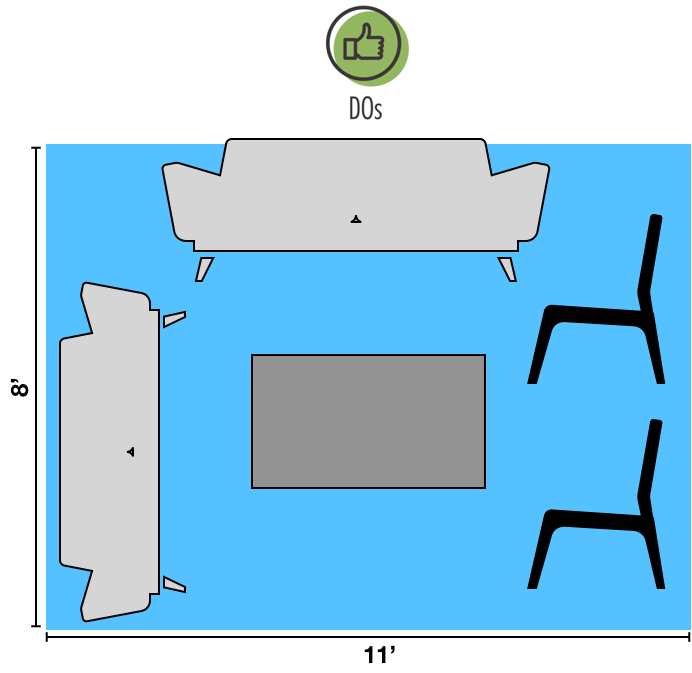
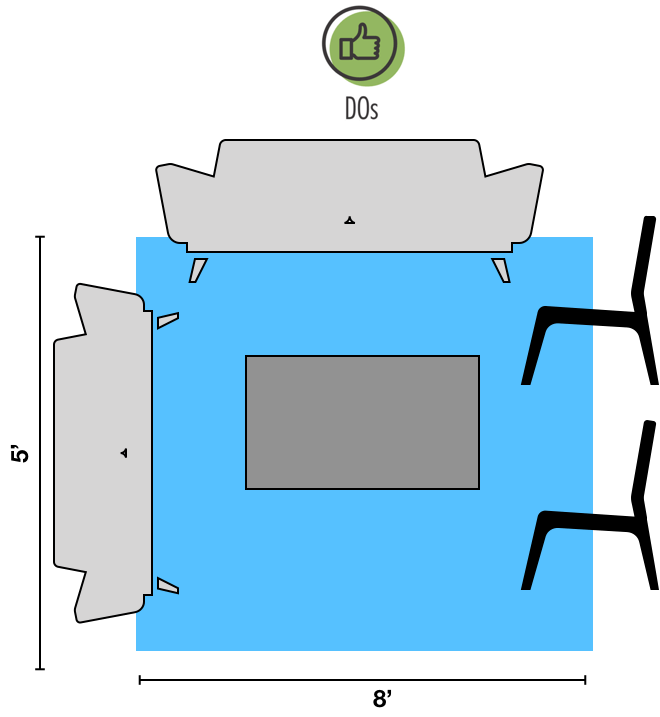
Since rugs are essential for creating boundaries for your furniture and defining spaces, you must ensure that your rug has appropriate size. You should use a correct size for your space. To find the right size rug, you must consider the size and the spacing of the furniture in the room. It is important to make sure that all the furniture fits on the rug. To at least the front legs of all of the sittings in the space.
Mistake # 6. Wrong Curtains Size and Height.

 Curtains or blinds can make or brake a home. What is the most common mistake people make when it comes to window treatment? Best way to decorate tall windows – with high curtains. Curtains make the room look more spacious when you mound the curtain rod closer to the ceiling instead of at the window frame. The floor landed curtains throw the eyes wide along the entire length of the curtains creating an illusions of height and spaciousness.

Do position of your rod approximately  4-6’’ above the window or install it closer to the ceiling
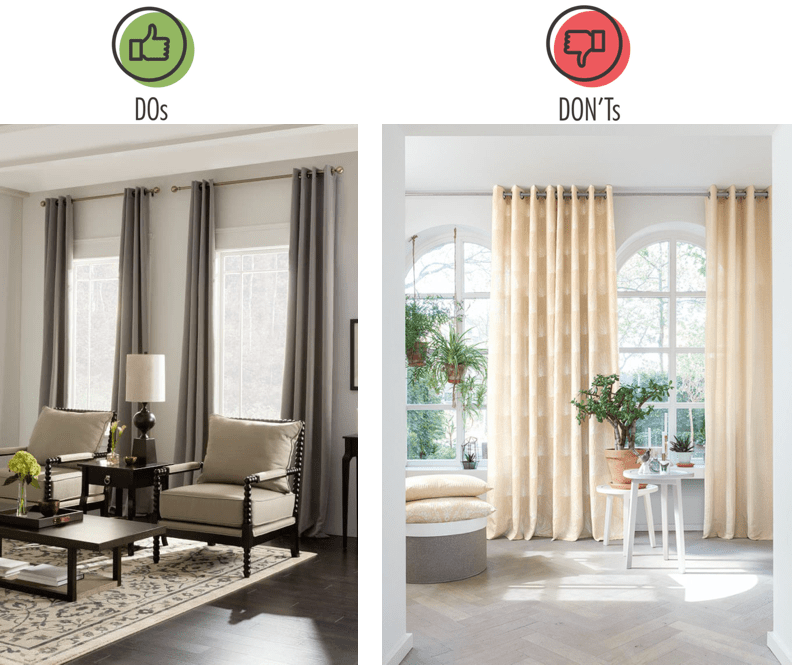
Ensure the rod is wide enough, so when the curtains are open, the inner edges just cover the windows frame but not the glass.  
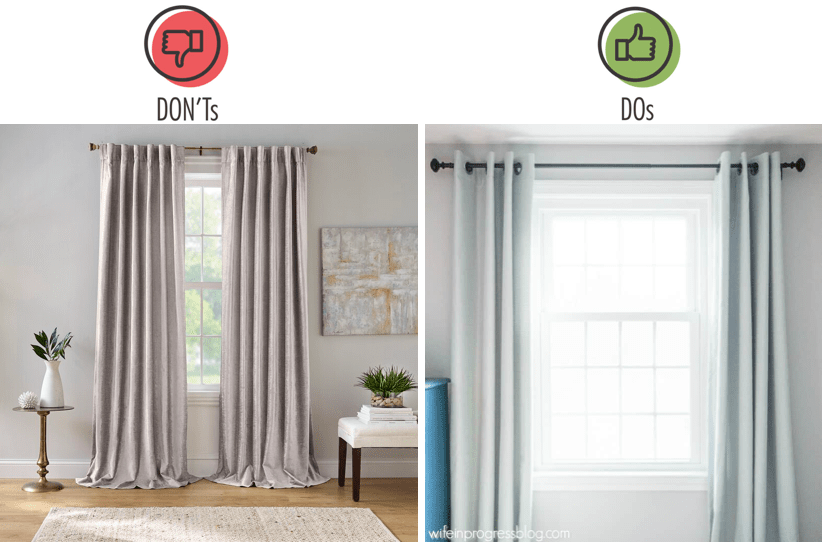
Stacking the curtain next to the window instead of covering it will help the window appear larger.

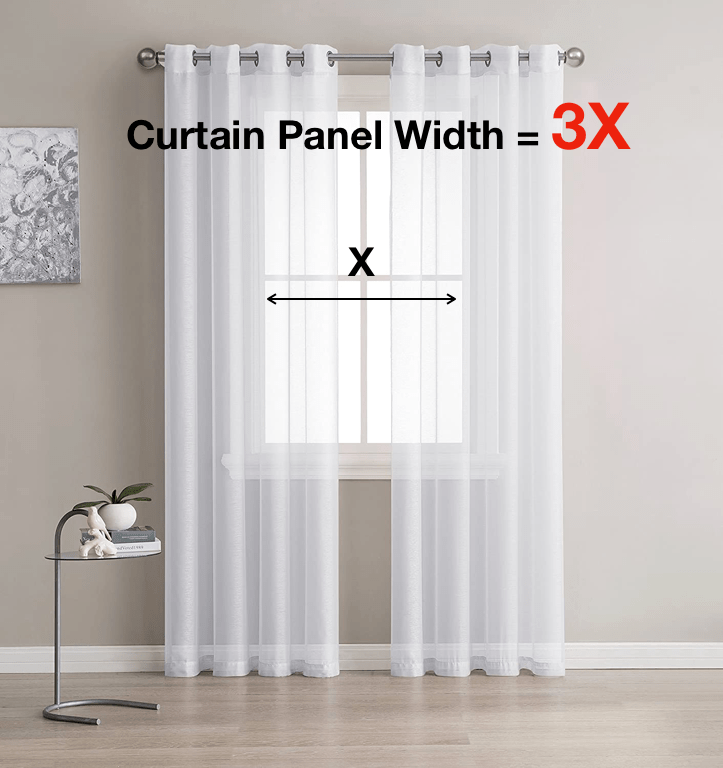
For an elegant look curtain’s panel’s should be wide enough that even when closed – there is fullness of them. To achieve that the width of the panels full and elegant, width of the curtain should be 3 times wider that the window.
Mistake #7: Wrong placement of the art on the wall

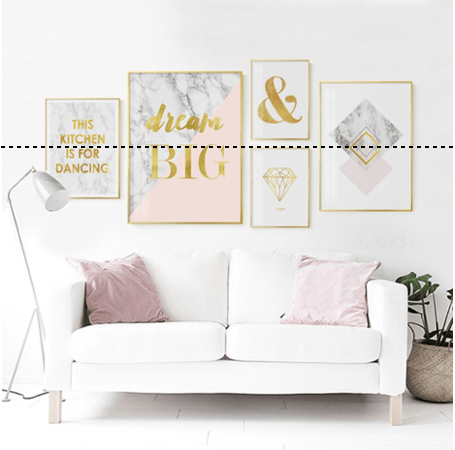
Hanging art too high or too low is a very common mistake. People  tent to hang art closer to the ceiling than it should be. Art should be hang at about eye level to appreciate in a natural way the piece of art.
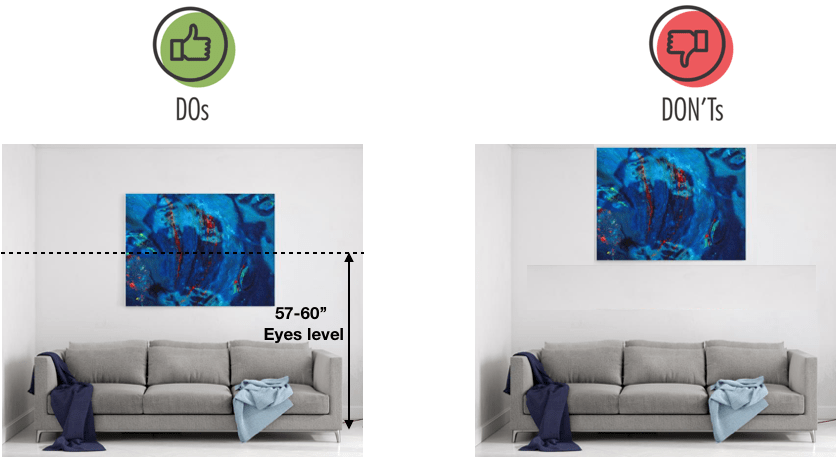
Align the pieces of art at their center.

 If you have several pieces of art in the frames or pictures, you can organize a gallery wall where each piece will be identical frames, or you can mix sizes and orientations of the frames for more relaxed style.
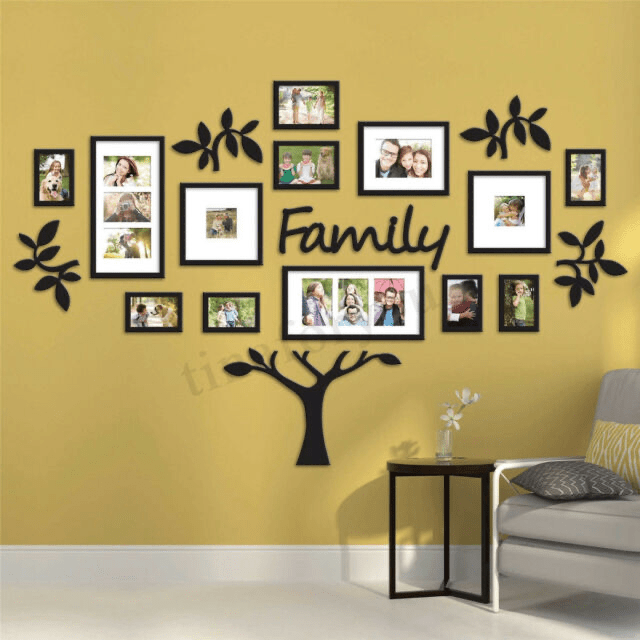
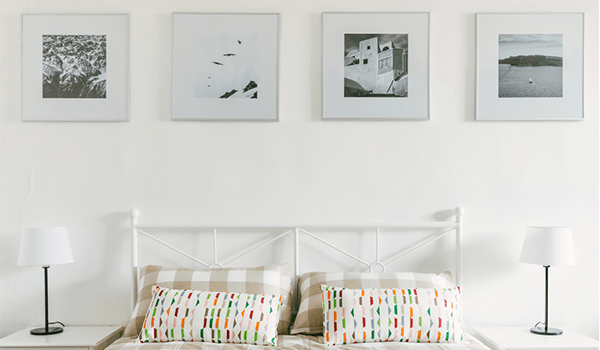
The best way to ensure that there is no mistakes – is to cut a frame outline on paper. Simply tape the tape cutout on the wall trying numerous placement options until you have a desired outcome

I hope this information was helpful for you and you will consider it when you will be decorating your home.
Tips of how to combine colors in your room

Tips of how to combine colors in your room

Why colors are so important in our life? How the color affects our everyday lives? Why it is critical to create a perfect color scheme for our space? It is because color is a form of non verbal communication. Color helps us to store and process images in our memories, that can radically affect our mood and emotions. When you walk into any space, the way you can translate the color and color combinations, can impact how you interpret the style, your mood and overall comfort level of the space. Actually, we are constantly combining colors when we are selecting our outfit or when we are choosing new decorative pillows, rug or curtain for our living room. All the time we are mixing and matching colors and patterns. It is true that the right way of selecting matching colors benefits your everyday life.

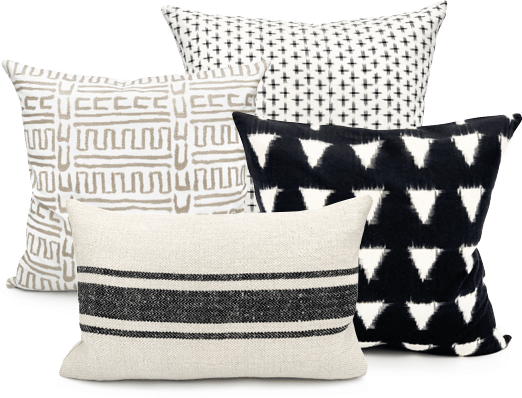
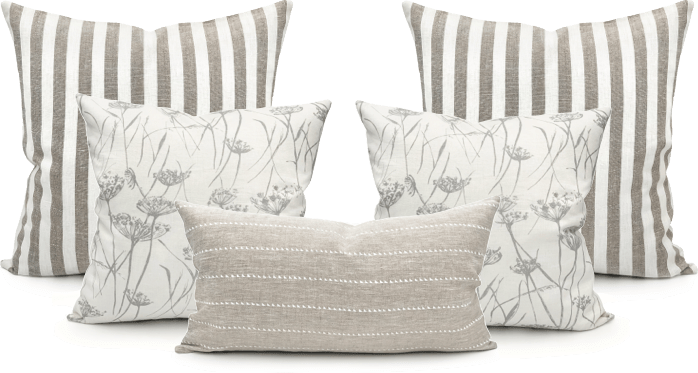
One of the most frequent questions that we are getting from our customers is to help them with the pillow combinations for their rooms,  how to combine, mix and match different colors, designs, textures and patterns and style them together. 

I want to provide you some tips of how to incorporate color combinations into your space.

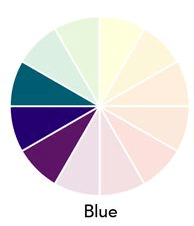
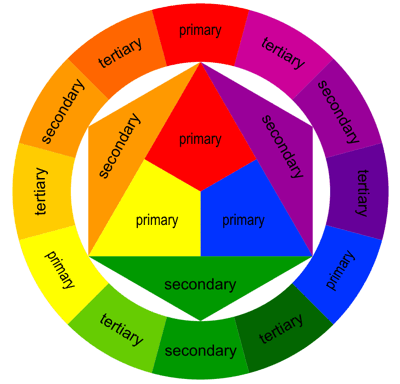
Color theory is about of how we interpret colors that we see, and how we respond to specific color combination and proportions. Color theory starts with the color wheel. 

There are three primary colors: red, blue and yellow. They are the building blocks of all other colors, they cannot be made by mixing other colors. Secondary colors – colors that can be made by mixing two primary colors. Secondary colors – orange, green and purple. Tertiary colors – the six shades that can be made by combining primary and secondary colors.

Now, let’s see how we can use colors when to create color scheme. 

Analogous colors

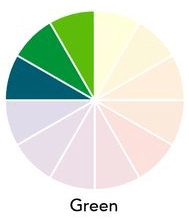
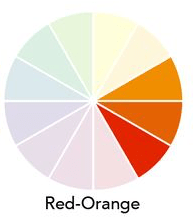
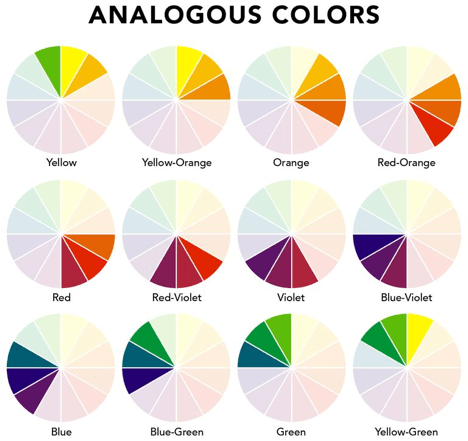
We can create an Analogous color scheme by choosing three or more colors that sitting next to each other in the color wheel.

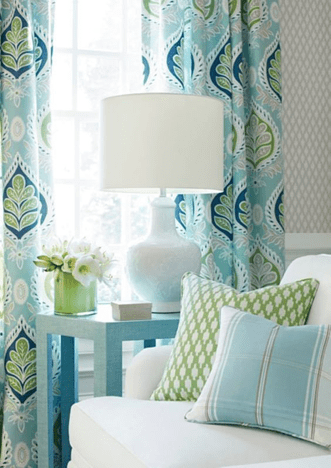
Let me show you the example of the rooms that are decorated using analogous colors:

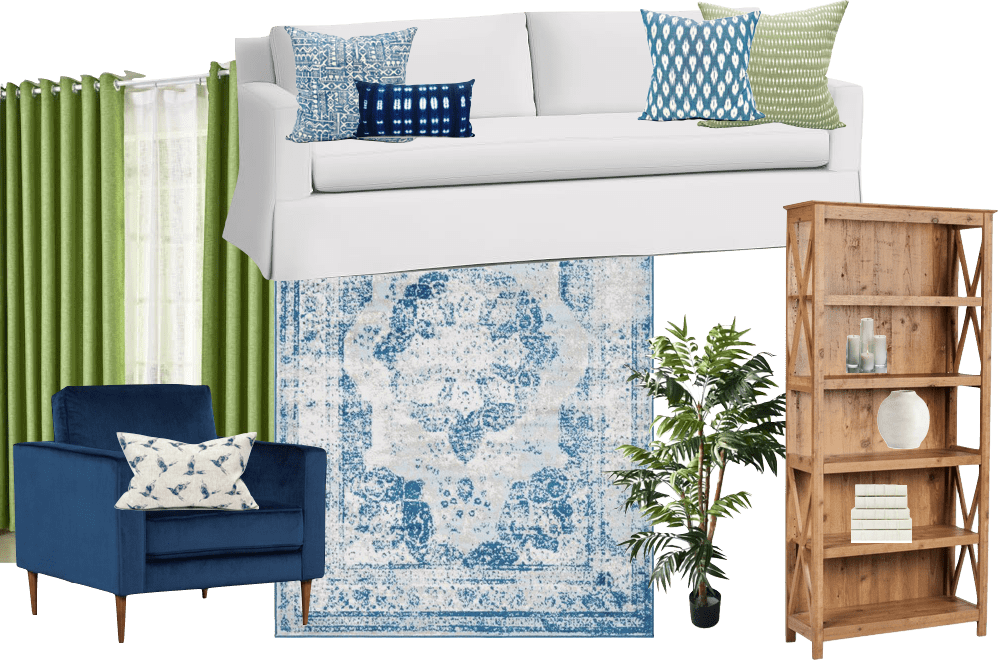
  1. Green and Blue:

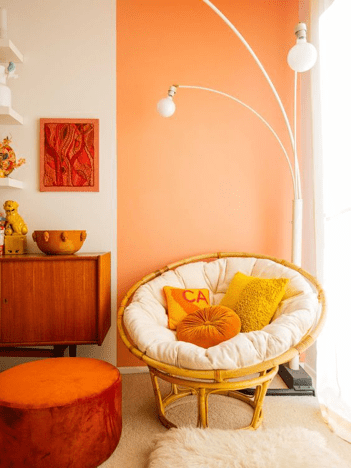
2. Red and Orange.

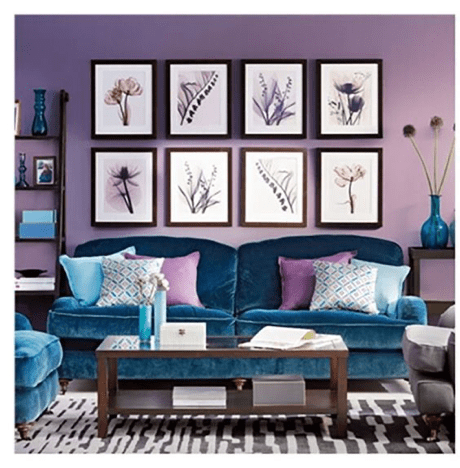
3. Blue and Purple

Since you are using three colors for that spaces, proportion is very important to keep the balance. You can incorporate 60%-30%-10% rule to keep an appropriate proportion between colors.

60% – Rug, Accent Pieces, Sofas, Walls

30% – Curtains, Side Chairs or Accessories

10% – Pillows, Patterned Fabrics, Decorative Accessories, Artwork

It is important to note that some natural textures such as wood, green plants or metal accessories can create beautiful dimension to the space.

If you prefer to have neutral colors for the overall look of the space, then you can add a pop-up color into your room that will beautifully compliment the look. If that is the case, you can apply an analogous color scheme into your accent elements and accessories as well.

Complimentary COlors

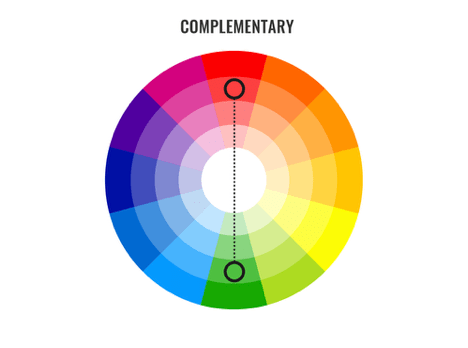
Another way to use a color wheel – is to select complimentary colors.

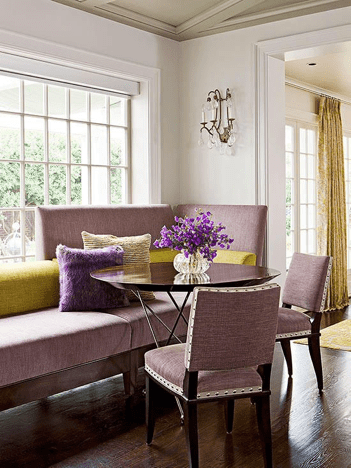
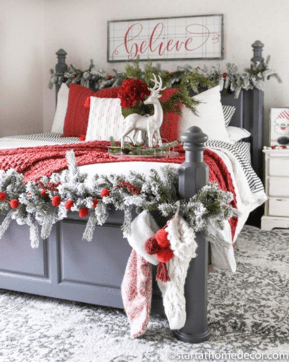
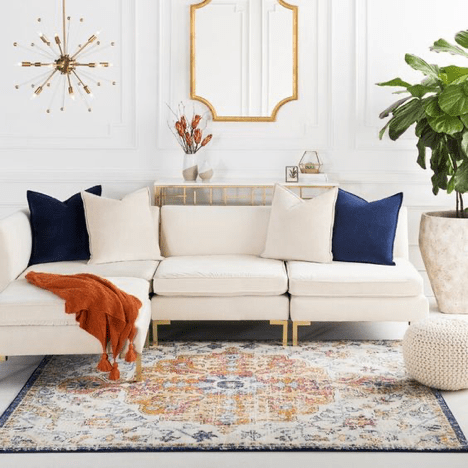
When it comes to  the color scheme, complimentary is the simplest solution, because this color scheme only involves two shades that are opposite to each other in the color wheel. Typically, one color acts as a dominant shade, the other – as an accent. That colors are extremely in high contrast, so you need to be careful of how to use them because they bring a strong energy into the space and it is a good idea to use them in small doses. You should think of them as an accents, and you should use plenty of neutrals to balance them out and provide a place for the eye to rest.

  1. Purple and Yellow

2. Red and Green

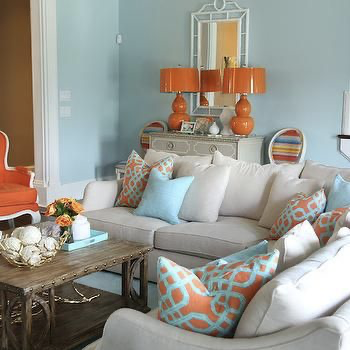
3. Blue and Orange. You can add a pop of color to the neutral general space. Apply contrasting colors into your accent elements and accessories

Monochromatic Colors.

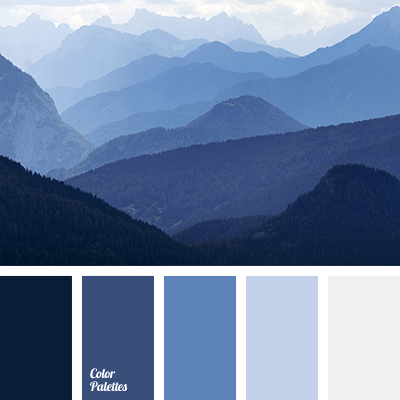
You can use tints, shades and tones of the same within the same color family

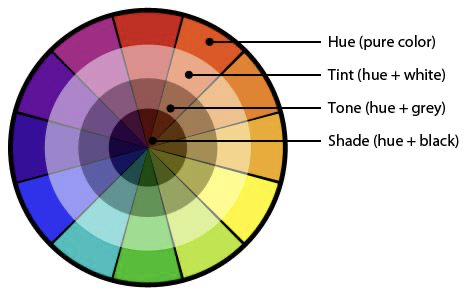
 Adding white to a pure color creates tints, adding black and white to a pure color creates tones of colors, adding black to color creates shades.

 Unity – is one of the benefits using monochromatic color scheme, but on  the other hand, this scheme is having a risk of making room boring. So, the best way to use this scheme is to combine different textures and prints. Add different patterns and textures to break up the monotony, it is also important to add natural textures or metals to add dimension to the room.

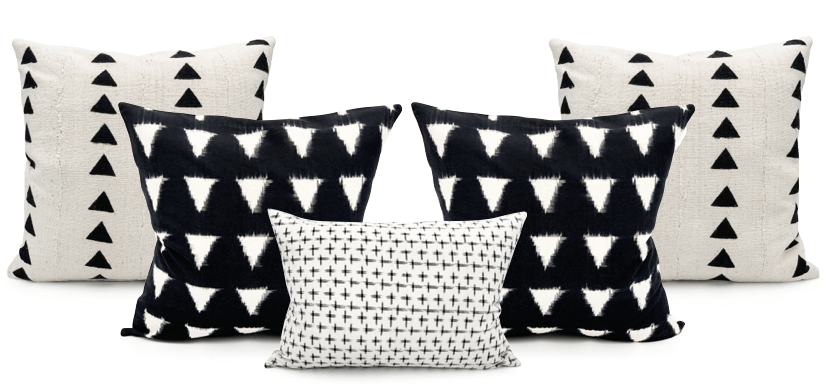
However, since interior design is not rigid , you can mix and match different color schemes in the same space. For example, you can have your walls, furniture, flooring and the general elements of the space on black , grey and white, which is a monochromatic option, and combine it with contrasting color scheme for accessories , like blue ottoman with orange cushions. Throws and other kinds of accessories 

Some important extra tips about adding colors into your space are:

  • Tie rooms together with accents. Accent colors can change from room to room, but continuing one consisting color through the home, help to connect the different spaces. Its purpose is to move the eyes around different rooms and to associate each one to another using the same color in some details, helping you balance and unify the spaces.
  • Use a consistent paint color on the walls – another simple way to create a cohesive feel. This is especially in homes that have open space concept
  • Add color prints and textures and shades into the space and pair it with solid colors, following the color scheme rules to get a perfect combination

If you want to learn more about colors, especially on how to select a perfect color for any space, how to combine, mix and match them depending on the style, or mood you want to create, follow our blog and visit our website krinto.com.